
The Cost You’re Already Paying
Most people don’t realise they’re paying an energy tax every single day — even when nothing appears to be running. Not because they’re careless. Not because they’re wasteful. But because “off” no longer means off.
This quietly costs people hundreds every year. Sometimes more. The money doesn’t vanish in one dramatic spike. It leaks away in the background — while you sleep, while you’re out, while your home looks perfectly normal.
If you’ve ever opened a bill and thought, “I don’t even use that much energy,” this is why.
Energy drains don’t announce themselves. They don’t break. They don’t fail. They sit quietly, drawing power in ways most people never think to check.
If you’re not actively looking for them, you’re almost certainly paying for electricity you’re not actually using.
Why This Problem Costs People So Much Money
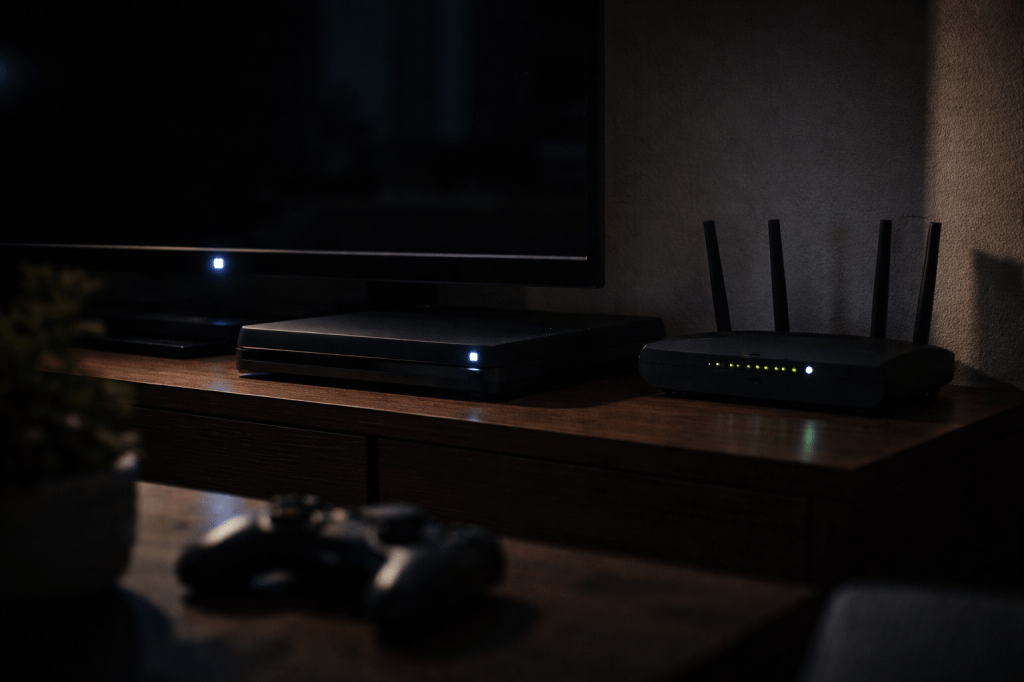
Here’s the uncomfortable truth: energy waste is invisible by design.
Modern homes are filled with devices that are never meant to fully shut down. They’re waiting. Listening. Staying warm. Staying ready. If something can turn itself on remotely, update itself, or respond instantly — it’s drawing power all the time.
This creates what can be called a Background Energy Tax.
Not a bill you notice.
Not a charge you approve.
Just a permanent deduction from your income that grows quietly every year.
Most people ignore it because nothing feels “wrong.” Until prices rise. Until bills spike. Until the same habits suddenly cost much more than they used to. At that point, the waste doesn’t just hurt — it compounds.
The Fastest Ways to Find and Fix Energy Drains
1. Accept This First: “Off” Is a Lie
If a device has:
- A standby light
- A remote
- Wi-Fi or Bluetooth
- A clock or display
…it is not off.
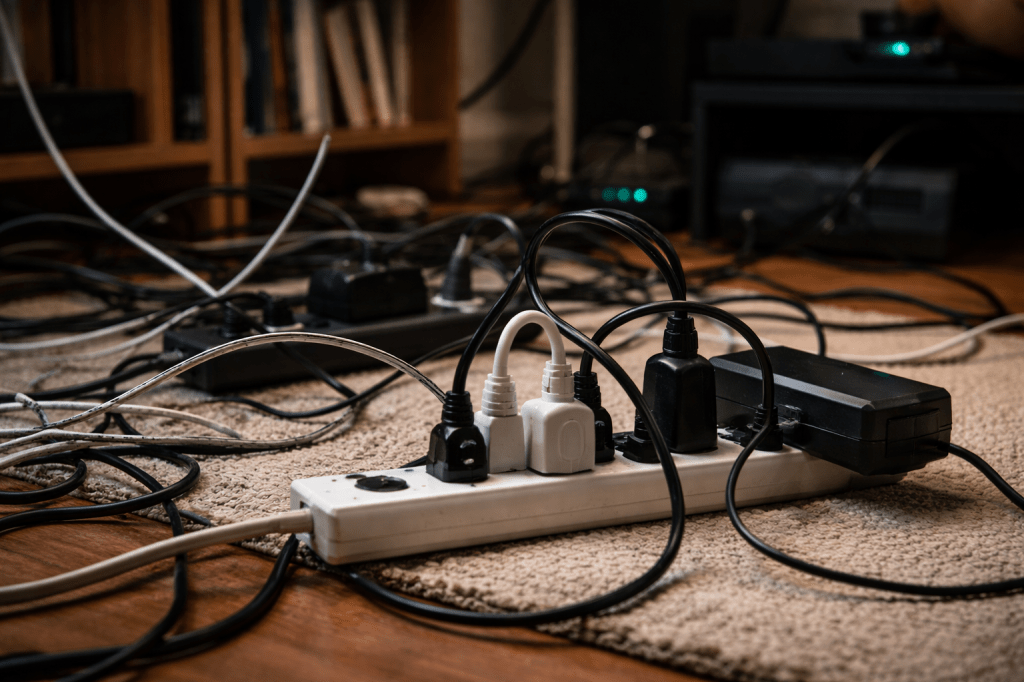
TVs, consoles, sound systems, office equipment, smart hubs — these often draw power 24/7.
Fix: Group them on switchable power strips and shut them down completely when not in use.
2. Ignore Small Stuff and Hunt the Big Drains
Phone chargers don’t move the needle.
These do:
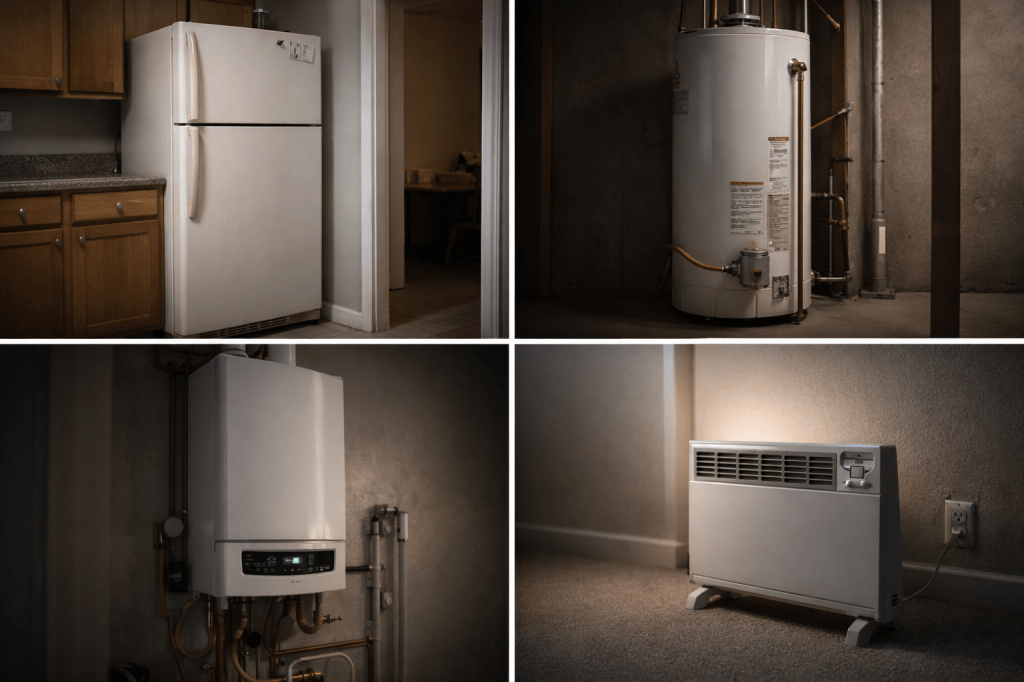
- Heating and cooling systems
- Water heaters
- Old refrigerators or freezers
- Dryers, ovens, and electric heaters
One poorly configured appliance can burn more money in a week than small devices do in months.
Fix: Adjust usage first. Replacement comes later.
3. Check Night-Time and Away Usage
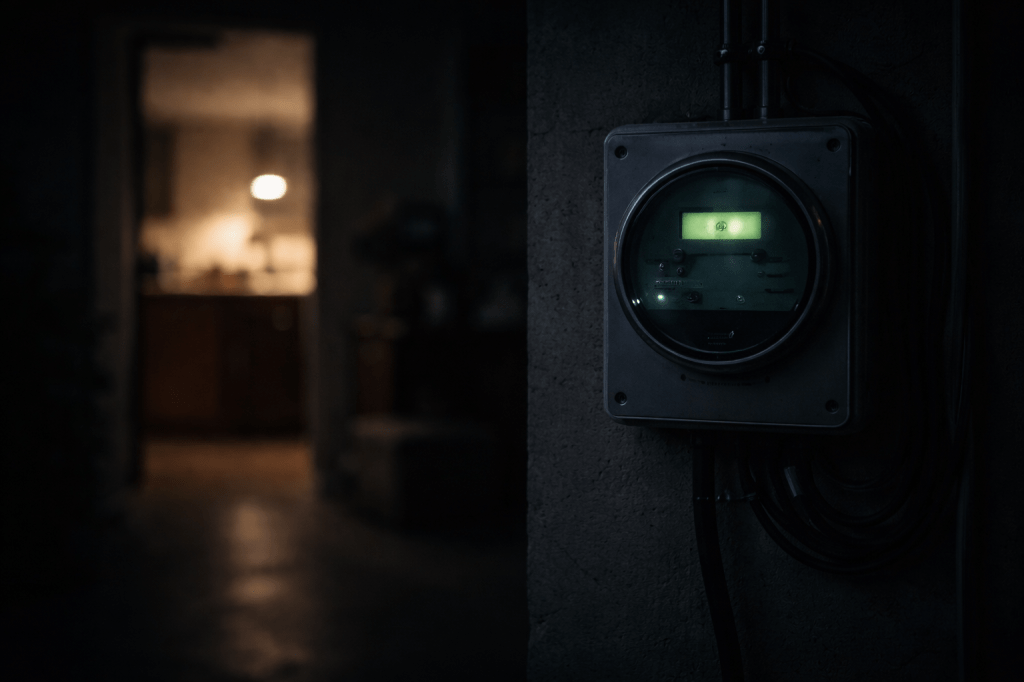
If your energy use barely drops when:
- Everyone is asleep
- The house is empty
You have phantom draw.
Fix: Turn off groups of devices or circuits one at a time and watch what changes.
4. Stop Guessing — Measure Once
Guessing feels cheaper than tracking.
It isn’t.
Most households only need to identify one guilty device to justify monitoring everything else.
One old freezer.
One misconfigured heater.
One entertainment setup that never sleeps.
That single discovery often pays for every tracking tool within weeks.
5. Compare Usage, Not Just Bills
Prices fluctuate. Usage tells the truth.
If your habits haven’t changed but your consumption has, something is leaking energy in the background.
Fix: Track month-to-month usage, not just cost.
Common Mistakes That Make Energy Drains Worse
This is how people accidentally overpay for years:
- Replacing appliances without fixing habits
- Assuming newer devices are automatically efficient
- Ignoring standby power because it “seems small”
- Only checking energy use once a year
- Waiting for bills to force action
The most expensive mistake?
Doing nothing because the problem feels abstract.
That’s exactly how background costs survive.
Tools, Products, and Services That Make This Easier
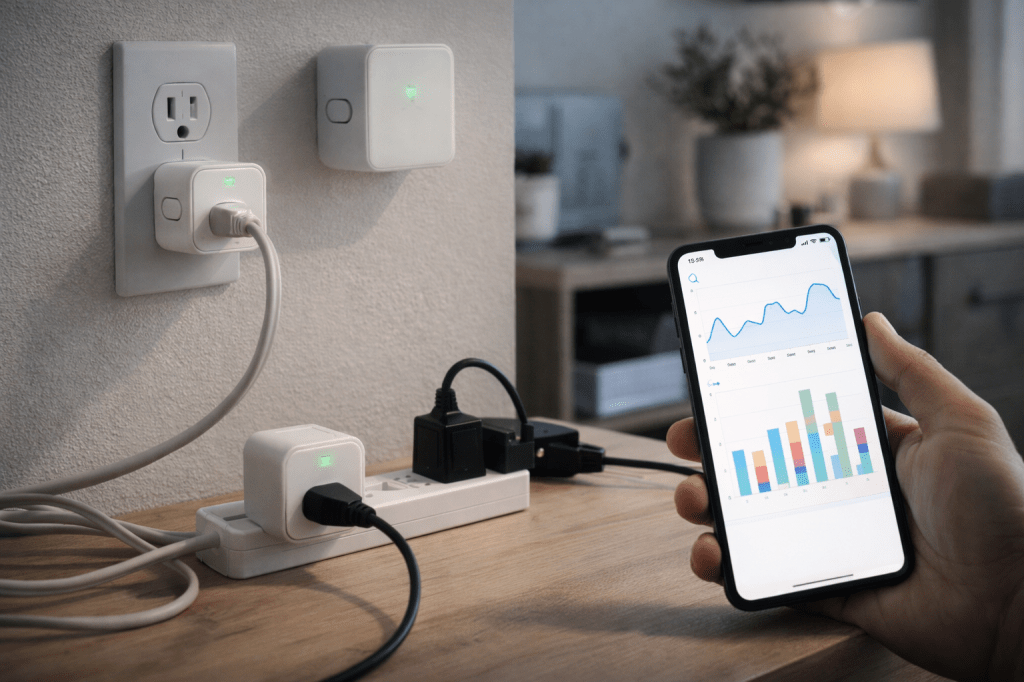
You don’t need to turn your home into a science project. The goal is clarity, not complexity.
Practical shortcuts include:
- Smart plugs to expose always-on devices
- Home energy monitors that show real-time usage
- Energy comparison services to detect overpayment
- Professional audits when usage makes no sense
- Subscription tracking apps that flag unusual spikes automatically
At a certain point, measuring costs less than guessing.
How to Stop This From Becoming More Expensive Later
Energy drains get dangerous when prices rise — because waste scales with cost.
When rates increase:
- Efficient homes feel pressure
- Inefficient homes bleed
The people panicking later are usually the ones ignoring silent drains now.
Prevent that by:
- Reviewing usage quarterly
- Killing standby power permanently
- Fixing the worst offenders first
- Tracking trends instead of reacting to bills
Do this once, and energy stops being a mystery.
Quick Checklist (Save This)

- ☐ Devices drawing power when “off”
- ☐ Switchable power strips installed
- ☐ Heating and water systems reviewed
- ☐ Night-time usage checked
- ☐ Monthly usage compared
- ☐ Monitoring tools in place
- ☐ Supplier or tariff reviewed
Miss more than two? You’re likely overpaying.
FAQs
Does finding energy drains really make a difference?
Yes. Many households cut energy costs by 10–30% simply by eliminating waste.
How often should I check for energy drains?
Every 3–4 months, or whenever routines change.
Is it worth paying for monitoring tools?
Often, one discovery pays for the tool itself.
What happens if I ignore this?
You keep paying a background tax that rises quietly every year.
Do small devices really matter?
Individually, no. Collectively and over time, absolutely.
Final Thought
Energy drains don’t feel like a problem — until they are.
Once you see where the money is leaking, you stop guessing and start keeping more of what you earn.
That’s the difference between paying bills and controlling them.
 Modern Fixes
Leave a comment